Your Chopping Board Might Be Doing More Damage Than You Think
Cross-contamination isn't complicated to prevent — most households just haven't set up a simple system for it.
Cross-contamination is one of those food safety terms that sounds abstract until you picture the actual scenario: raw chicken gets chopped on a board, the board gets a quick rinse, and twenty minutes later that same board has salad on it. The chicken's cooked, so people assume it's fine. It's not the chicken that's the problem — it's whatever bacteria was left behind on the board, like Salmonella or E. coli, that's now sitting on food that's never going to be cooked.
Why "a quick rinse" doesn't cut it
Chopping boards develop grooves and scratches from normal knife use, and those grooves are exactly where bacteria settle in and hide from a quick rinse under the tap. A board can look perfectly clean and still be carrying bacteria in the cut marks. That's true whether it's plastic or wood — the material matters less than most people think, and the cleaning routine matters more.
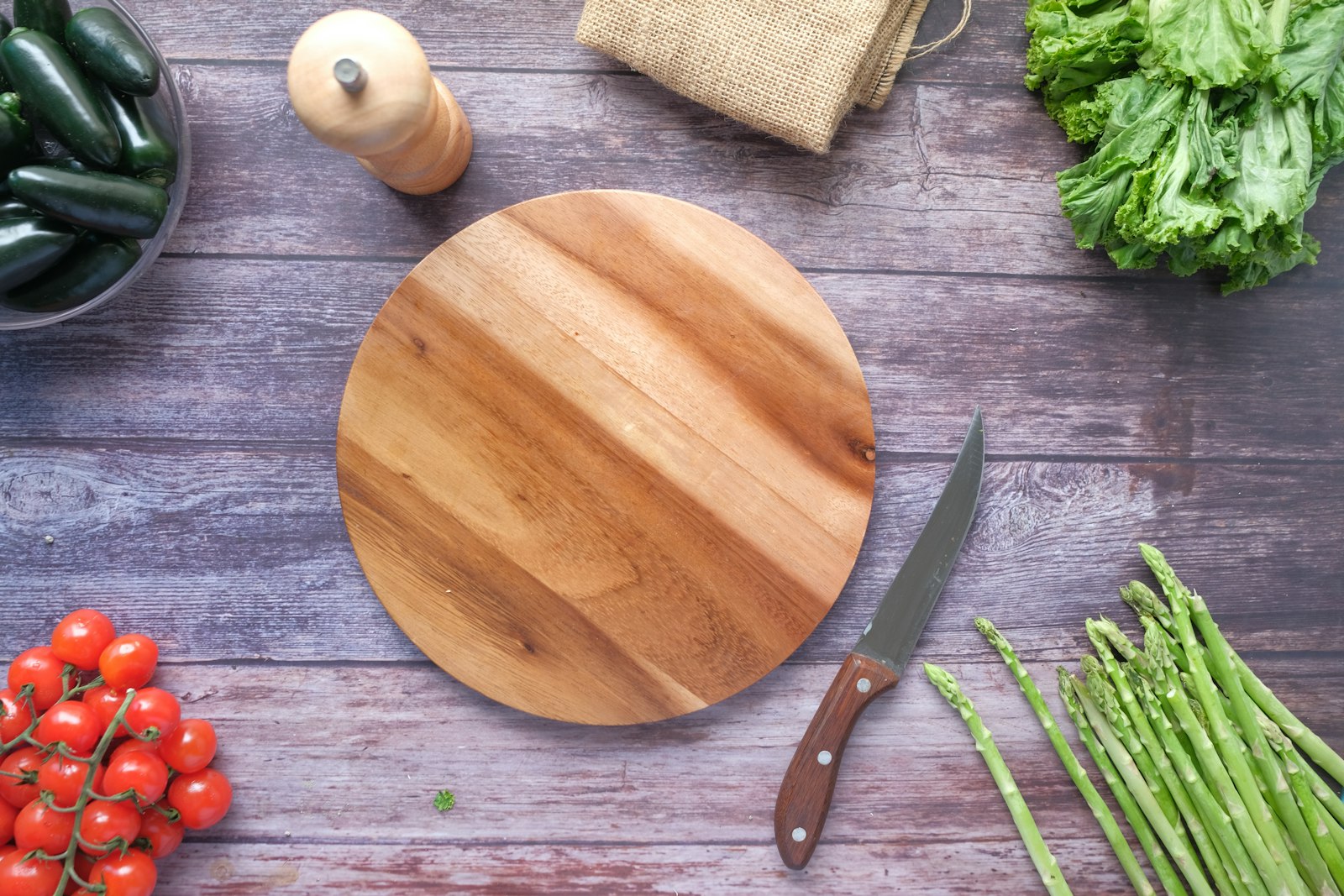
Plastic vs wood: does it actually matter?
There's a persistent idea that wood boards are automatically less hygienic than plastic because wood is porous. Research on this is actually more nuanced than that assumption suggests — studies comparing well-maintained wood and plastic boards after thorough cleaning haven't found a significant difference in bacterial survival between the two. What does matter is condition: a plastic board covered in deep knife scars is worse than a wood board in good nick, and vice versa. The material's a secondary factor. Maintenance is the primary one.
USDA guidance is straightforward on this: either non-porous surfaces or wood are fine for raw meat and poultry, but replace any board once it develops cracks, deep grooves or chips that are hard to clean properly.
The system that actually prevents it
You don't need a professional kitchen setup to solve this — just a basic separation system:
- Dedicate one board to raw meat, poultry and seafood. Colour-coded boards make this effortless (a lot of households use red for raw meat) but even just mentally designating "this one's for meat" and sticking to it works.
- Use a separate board for produce, bread and anything ready-to-eat. This is the board that touches your salad, your sandwich bread, anything that isn't getting cooked afterward.
- Wash boards in hot soapy water after every single use, not just a rinse — scrub the surface properly, rinse with clean water, and either air dry standing up or dry with a clean towel.
- Never put cooked food back on a board (or plate) that held raw meat without washing it first. This one catches people out at barbecues constantly — the plate that carried raw sausages to the barbecue shouldn't be the same plate the cooked ones come back on.
- Replace boards once they're visibly worn — deep grooves, cracks, or chips are a sign it's no longer cleaning up properly no matter how well you wash it.
Beyond the board itself
The same logic applies to knives, your hands and the benchtop. If a knife's been through raw chicken, it needs a proper wash before it touches anything else — not a wipe on a tea towel. Same with hands: a proper wash with soap after handling raw meat, before touching anything else in the kitchen. And the bench itself needs a wipe-down with hot soapy water (then a sanitiser if you want to be thorough) anywhere raw meat or its juices have touched, before food prep continues on that spot.
None of this is complicated once it's a habit — it's just a habit most kitchens haven't actually built. If your kitchen could use a proper reset (benches, boards, all of it) that's exactly the sort of thing covered in a standard regular clean.
Is a wooden chopping board less hygienic than a plastic one?
Not necessarily. Studies comparing well-maintained wood and plastic boards after thorough cleaning have found little difference in bacterial survival between the two. Condition matters more than material — a heavily scored board of either type should be replaced.
How many chopping boards do I actually need?
Two is a workable minimum for most home kitchens: one dedicated to raw meat, poultry and seafood, and one for produce, bread and anything that won't be cooked. Some households use a third for cooked/ready-to-eat food specifically, which adds another layer of separation if you're keen.
Is it enough to just rinse a board under the tap between uses?
No. A rinse doesn't reach bacteria settled into knife grooves and scratches. Wash boards in hot soapy water with proper scrubbing after every use involving raw meat, poultry or seafood, then rinse and dry.
Kitchen hygiene is a standard part of every clean we do — benches, boards, the works.
Book a CleanSources: USDA Food Safety and Inspection Service; NSW Food Authority. Last checked July 2026. General information only, not professional food safety advice for commercial kitchens.